

Case Study: Validating a Hazardous Tree Survey Diagnosis
The Initial Tree Risk Assessment
One of the most frustrating aspects of conducting a professional tree survey is rarely getting to see the long-term outcome of our diagnoses. However, a recent follow-up provided a perfect case study in the value of proactive management.
During a routine tree risk assessment, our team flagged a mature lodgepole pine (Pinus contorta). Fortunately for our team—though unfortunately for the tree—we recently had a rare opportunity to review how that diagnosis played out in the field.

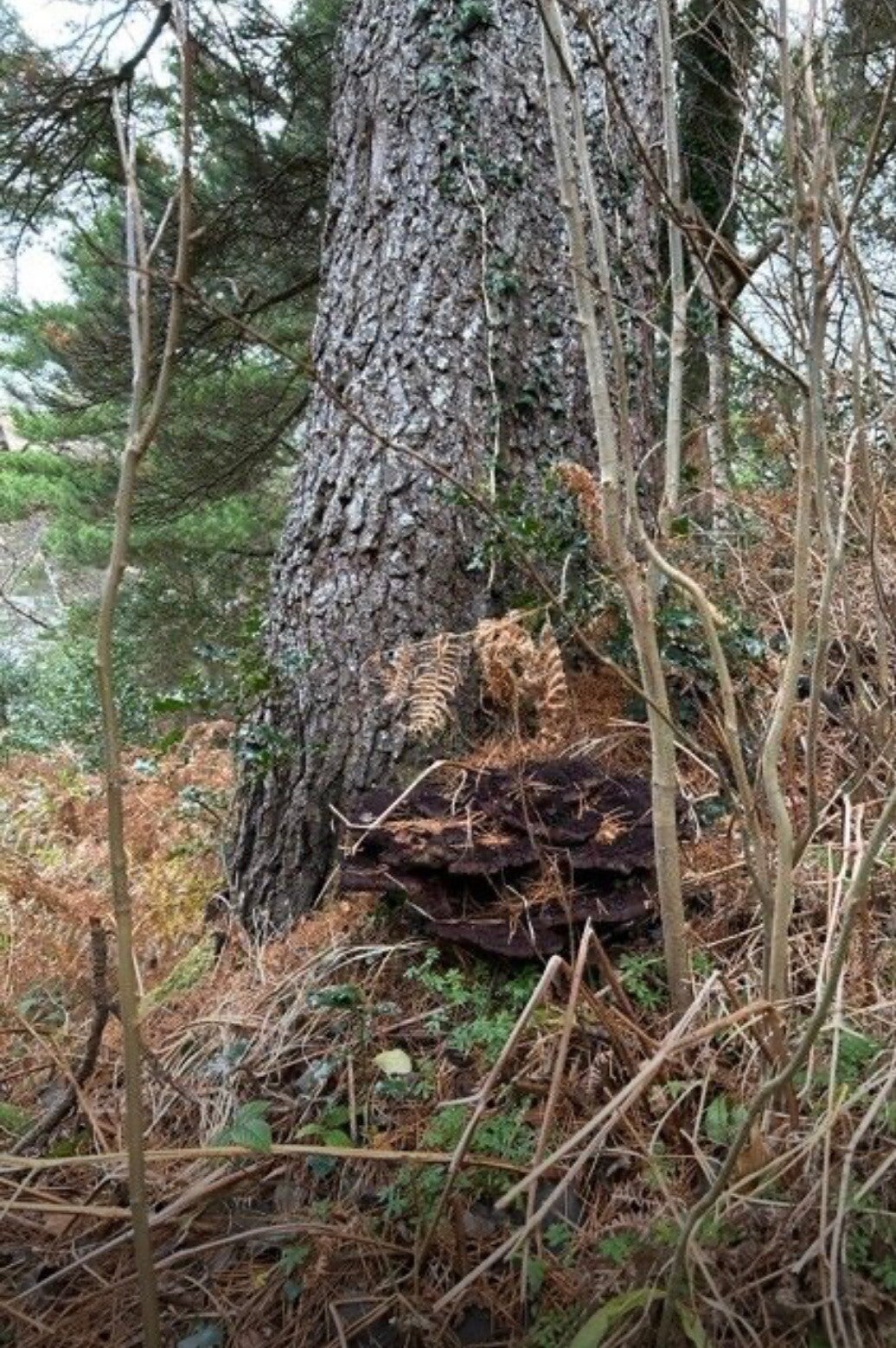
Arborist Report & Findings
In our original arborist report, we had officially condemned the tree and recommended immediate removal. Our assessment cited two critical structural hazards:
- An advanced, aggressive infection of Dyer’s maze gill fungus (Phaeolus schweinitzii), which compromises root and butt stability.
- A pronounced, uncorrected lean that showed absolutely no signs of self-correction or straightening.
The Outcome
Nature unfortunately took its course, and the tree ultimately failed exactly as predicted. However, seeing our diagnosis fully validated—with zero resulting property damage—reaffirms why timely risk data is so vital. It proves that a precise, proactive arborist report is the best tool property owners have to prevent costly liabilities before disaster strikes.

Tree Consultancy Ireland Encounters "Eiffel Tower Fungus" in Co. Dublin
TCI recently encountered the "Eiffel Tower fungus" (Inonotus dryadeus) during a routine site inspection. The fungus had colonised the base of a veteran oak (Quercus robur), prompting a distinct buttress formation that closely resembles the base of the Eiffel Tower, hence its unique name.
This selective white rot fungus decays the compressively strong wood of a tree, leaving behind only the cellulose and hemicellulose. It is mainly found on oak species, which frequently show a high tolerance to the fungus due to this reactive buttress development. Indeed, it is a remarkably effective survival response; despite the extent of the colonisation, this specific tree still stands after recent storms.


Professional Tree Services & Assessments
Identifying specialised fungal growth like Inonotus dryadeus is a critical part of maintaining landscape safety and compliance. Whether you require a comprehensive tree survey report in Dublin or a detailed arborist report to assess veteran trees on your property, our team possesses the specialised knowledge required to evaluate complex structural health.
Furthermore, if you are planning a development, our experts can prepare a formal Arboricultural impact assessment to ensure your project meets all local planning regulations while protecting valuable local canopy.